Home · Oil and Gas Software · Drilling Data Management

NWE WellReport™ · Data — Master Well File

Drilling data management software with one well record.

Every well generates the same archaeology problem: the plan in one file, the surveys in another, the reports in a folder, the costs in a spreadsheet, the close-out in a drawer. The Master Well File ends it — one record per well, from the first target through P&A, that every module writes to and every report reads from. This page is about the capstone of the whole platform: custody.

The custody problem

A well's data has a dozen custodians and no chain of custody.

When the number matters most — at billing, at a dispute, at the next well's planning — nobody can prove which version was the well's truth.

Version chaos is not an inconvenience; it is a cost. The survey file that was superseded but never deleted. The BHA spreadsheet that diverged from the reports. The end-of-well package that restated numbers the daily reports had already issued differently. Each fork is small. Together they mean the well's history cannot be vouched for by the people who drilled it.

Drilling data management, done right, is boring in the best way: one record, written once, versioned when corrected, and readable by every stage of the well's life — including the stages that come years later, when the well is re-entered or its offsets are planned.

The Master Well File

One chain, plan to P&A.

The structure mirrors the well itself.The Object Explorer organizes the record the way the well is built: the well, its wellbores and legs — sidetracks included, parents preserved — each BHA tied to its own surveys, and every document the well produced filed against the record that produced it.

01 / THE FILE

Everything the well produced, in the well's file.

Plan, targets, and stages; the accepted survey ledger; every run record with its BHA and Motor reports; the daily reports as issued; costs, field tickets, and failure reports; the formal end-of-well package. Not links to those things — the things themselves, in one file, because they were never anywhere else.

  • Plan, surveys, runs, reports — one file
  • Costs, tickets, failures filed with the well
  • End-of-well package in its home record
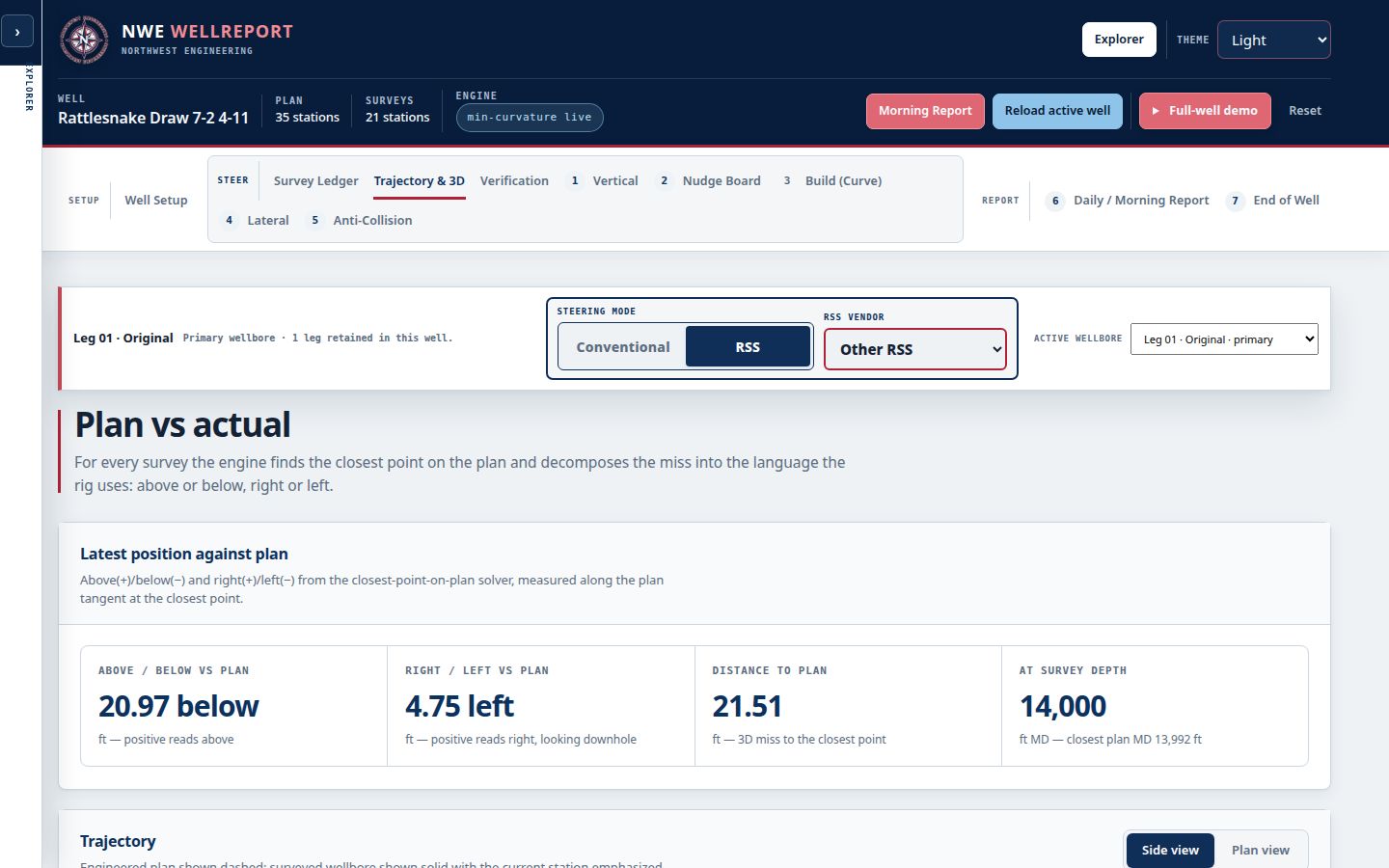
Live NWE WellReport workspace showing the Master Well File record
02 / THE CUSTODY

Versioned, traceable, and findable years later.

Corrections are versions, not overwrites: an amended survey carries its history, and every auto-filled value records what the professional overrode it with — or restores the automatic value in one click. And the record stays findable: the well file is the front door to every well you've ever drilled, so an offset's planning starts from the actual history of the wells around it.

  • Versioned surveys and records
  • Overrides kept, one-click restore
  • Every well findable from one door
Live NWE WellReport Directional Drilling workspace with the full well record

The custody chain

Written once. Never forked.

01

The record opens with the plan.

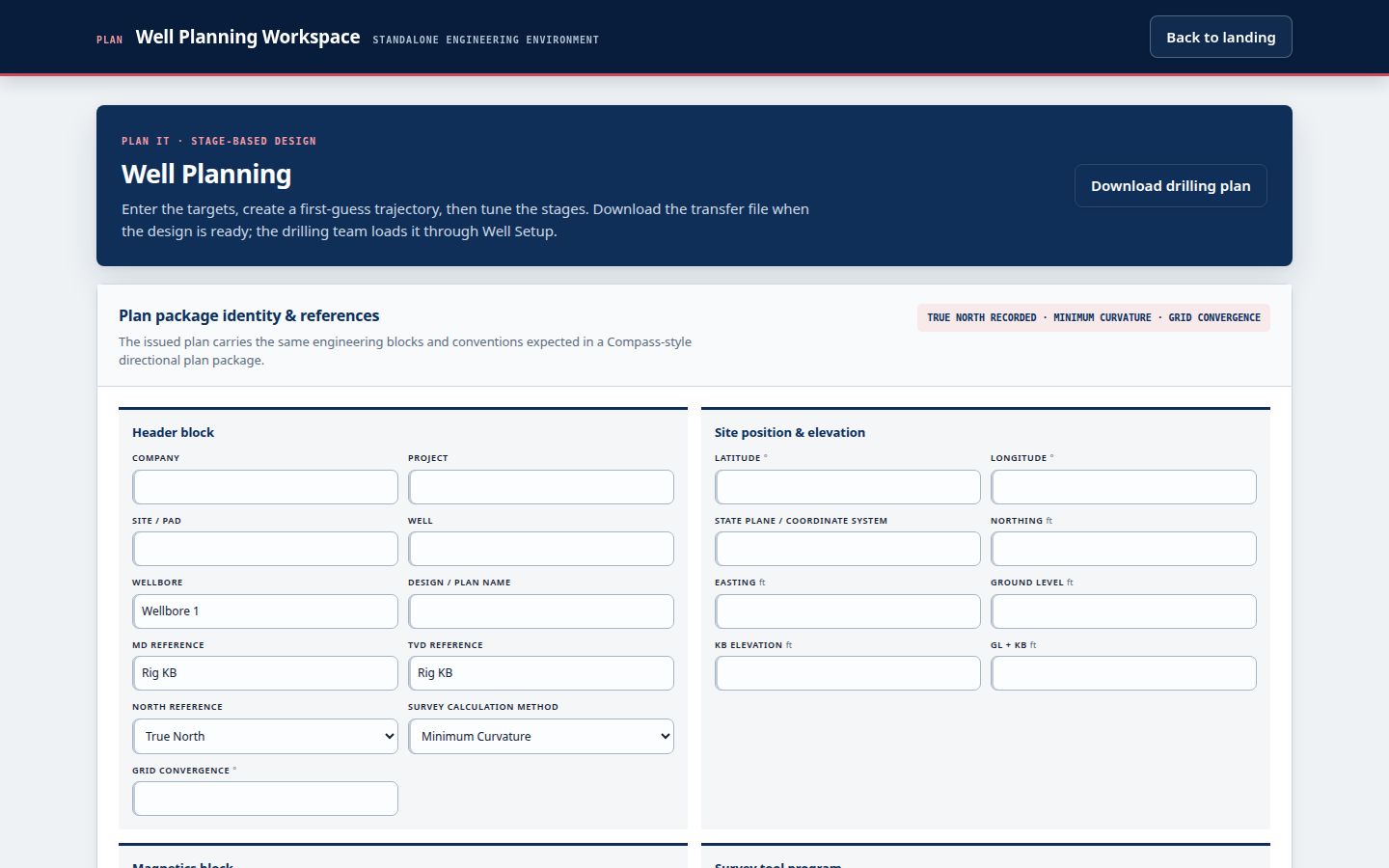
Well setup creates the file; targets and the stage-based plan are its first entries.

02

Every stage writes to it.

Surveys, runs, reports, costs, tickets, failures — each lands in the same record as it happens.

03

Corrections are versions.

Nothing is silently overwritten; amended data carries its history with it.

04

The record outlives the well.

Close-out, re-entry, offset planning — the file remains the well's history of record.

Deliverables

One file. Every answer about the well.

If it happened to the well, it is in the well's file.

Ask the record anything — what was drilled, what it cost, what failed, what was reported — and the answer comes from the same custody chain that produced it.

  • Master Well File per well
  • Object Explorer — well to survey
  • Versioned survey ledger
  • Complete report archive
  • Costs, tickets, failure reports
  • Sidetrack legs, parents preserved
  • End-of-well package in record
  • Full well history, findable
One chain of custody · plan to P&A

Where it stands

In founding field testing now.

The architecture testers are proving.The Master Well File is not a feature bolted onto the platform; it is the platform's premise, and the founding field test exercises it end to end — one demo well, every module, one record. Founding tester seats are open until October 25.

Honest about persistence and scope.The record model — one file per well, versioned, cross-module — is how the platform is built and how testers use it. Long-term archival, the open API, and the OSDU-compatible consumption layer are production-backend commitments, stated as direction. What we will not do is call a folder of exports a data platform in the meantime.

Common questions

Questions, answered straight.

What is drilling data management software?

Drilling data management software keeps a well's operational data — plan, surveys, run records, reports, costs, and close-out documents — in one governed record instead of scattered files. In NWE WellReport that record is the Master Well File: every module writes to it as the work happens, and every report, export, and the end-of-well package reads from it, giving the well a single chain of custody from the first target through P&A.

What is the Master Well File?

The Master Well File is the one record for one well. It holds the well's plan and targets, its accepted survey ledger, its BHA and run records with their reports, the daily reports as issued, daily costs and field tickets, failure reports, and the formal end-of-well package — organized in the Object Explorer the way the well is built: well, wellbores and legs, BHAs, and their surveys.

How does chain of custody work for surveys?

A survey enters the ledger once — typed at the rig or imported with accept/reject review — is QC-checked at acceptance, and from then on is the version every consumer reads. If a station is later amended, the amendment is a new version with its history kept, never a silent overwrite; the same discipline applies to auto-filled values across the platform, which record the professional's override and restore the automatic value in one click.

What happens at handoff between stages — drilling to completions to close-out?

Nothing — and that is the design. Because every stage writes to the same well record, there is no handoff file to build, email, or reconcile. Completions works the same well the drilling record describes; the end-of-well package generates from what both stages recorded; the custody chain never breaks because it never changes hands.

Can I find an old well's data later?

Yes. The Master Well File is the front door to every well you've ever drilled — its plan, as-builts, reports, costs, and close-out stay in the record after the rig leaves. That is what makes offset planning and re-entry work honest: they start from the well's actual recorded history, not from whoever kept the best folder.

Founding pilots now open

Put it on real wells.

Bring your current workflow, your survey exports, and your field team. We verify the math against your current software before your team relies on it in the field, train your DDs, review what works, and make anything that does not work right.

$5,000First year · up to 5 wellsTalk to us about a pilotExplore the live platform